
Why we build small websites
Most of our clients need four to six pages, not forty. A short case for small sites, and what we put on them instead.
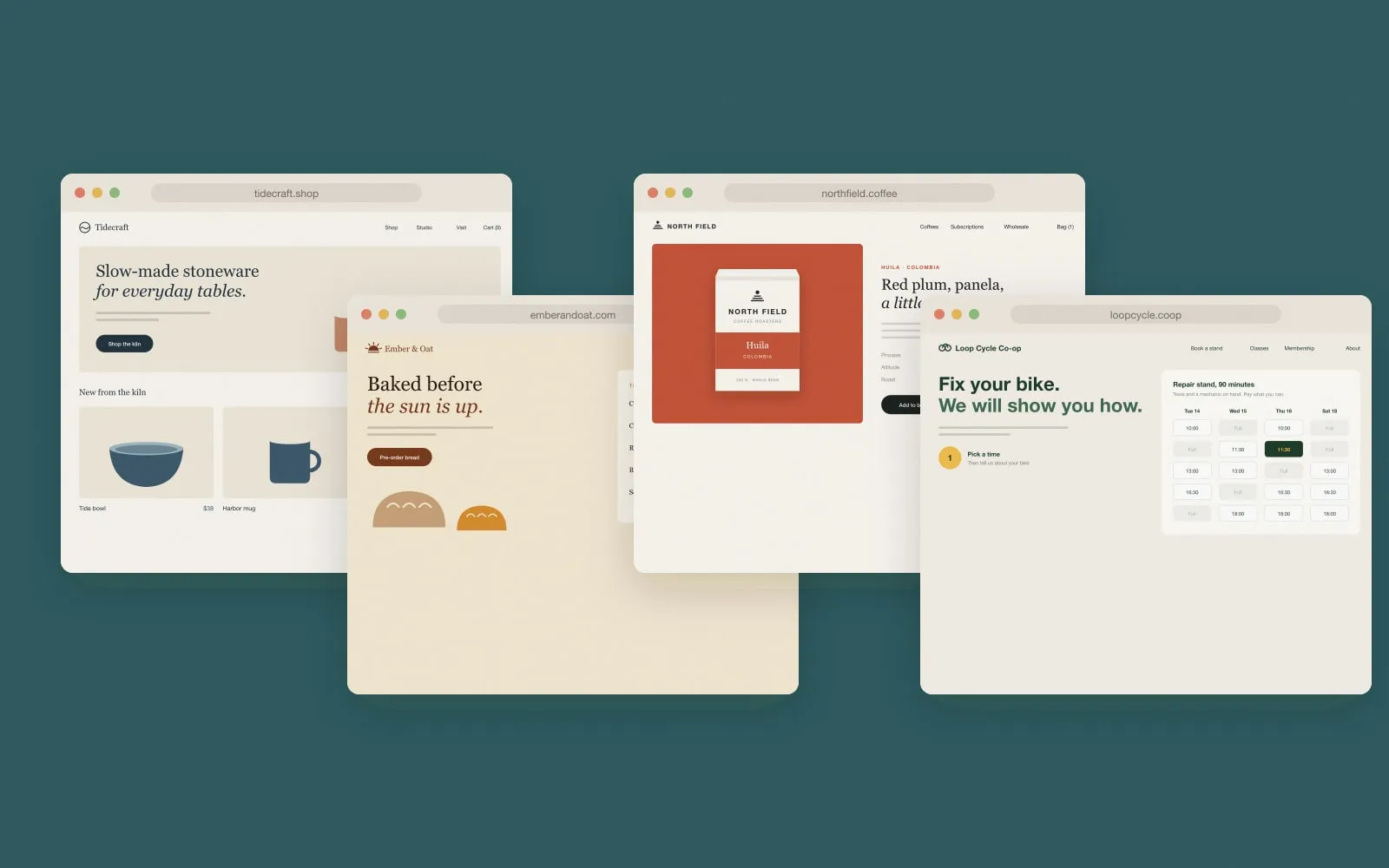
Every client we have worked with has, at some point, asked for more pages. A page for the team. A page for press. A page for the story, and a different page for the values. It is a reasonable instinct. It usually makes the site worse.
Every page is a promise
A page is not just something you publish. It is something you have to keep true. The "Our team" page with someone who left last spring. The "Events" page with an event from two summers ago. Small businesses do not have a web team, so every extra page slowly becomes a small lie.
Four to six pages
Most makers we work with need the same short list:
- Home, which says what you make and where to get it
- Shop, menu or booking, which is the reason most people came
- About, one page with the real story and a real photo of the place
- Visit or contact, with hours that are actually correct
- Journal, only if someone genuinely wants to write it
That is it. Loop Cycle Co-op went from nine pages to four. Tidecraft has five. Nobody has asked for the old ones back.
Small is also fast
Fewer pages means less code, fewer images and fewer things to break. Our sites are mostly plain HTML with a little CSS, and they load quickly on a patchy phone signal at a farmers market, which is where a surprising number of our clients' customers find them.
Put the effort where people look
The time we save on pages we do not build goes into the ones that matter: better product photos, clearer booking, a menu that updates itself. Small websites are not less work. They are the same work, pointed at the right things.